The ‘human’ aspects of web meetings – an introduction
Digital meeting places have become an everyday and necessary tool due to the covid pandemic. Lockdowns or quarantines made it nearly impossible to meet face to face no matter what the occasion was. Therefore almost everyone had or has touchpoints with the topic of web-meeting – whether in a professional, educational or private environment. Very soon in the intense usage of the online communication tools terms like “Zoom-Fatigue” came up and with it the problems of digital interaction became visible: Video-telephony enables to see and hear each other, but we are missing out on the most of the non-verbal communication signs we are used to. Nevertheless, digital communication tools will surely remain as an important part in the future of our communication. Apart from the problems, they enable skilled people to work together, let them share their knowledge, what leads to a new perspective on workspaces. Therefore the examination and optimisation of those tools could lead to useful new approaches and insights.
My motivation to research on this topic comes also from the personal experiences I made this year. When I first met the students of CMS2020 at the virtual Barcamp in October, I felt isolated and could not make an emotional connection to whom I saw on the screen right before me. This changed when I switched the mode to “together mode” (see image below): I couldn’t help myself but smiling about how happy it made me, to be visually part in this virtual room with the other students. This was definitely not a rational reaction but it made the Barcamp experience of coming together more accessible and human to me.

In order to find out more about those human and emotional aspects of web meetings, I want to research on the following research questions:
- What are the fundamental aspects of verbal and non-verbal communication to create a emotionally connected meeting situation? Which impact have aspects like personal distances or the meeting environment?
- Which aspects are already considered or effectively compensated in current web meeting applications?
- What could be adapted from other online communication environments like social media, online events or multiplayer games?
- Which technologies could improve the human factor of web meetings? Could VR/AR or AI play a role?
In my viewpoint, the year 2020 and everything that happened so far is going to be a starting point for a new thinking of how we virtually come together in an innovative, creative and effectively way. In order to underline this proposition I want to mention this examples:
Voodle
https://voodle.com/
The business communication app “Voodle” focusses on short video snippets that are produced by the users. The videos contain an automatic transcription to follow along without the need to watch it with sound. The app aims to create an alternative to web meetings by short, emotional and effective content.

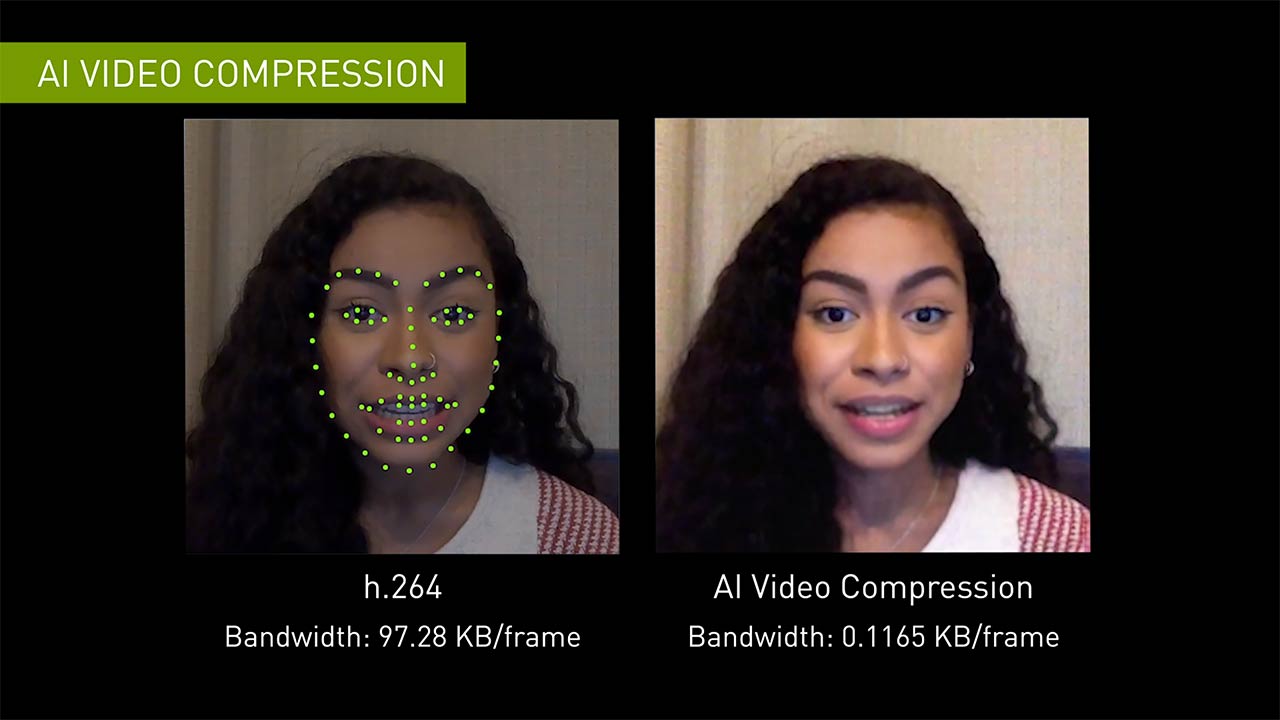
NVIDIA Maxine
https://developer.nvidia.com/maxine
The topic of artificial intelligence is growing significantly in recent years and can also be found in the internet mediated communication environment. The NVIDIA Developers for example are on a AI that turns our face into a deep fake and let it react with facial expression to our spoken words. This enables a visual communication in environments with a bad bandwidth.
Wave
https://wavexr.com/
The tech company “Wave” enables musicians to give virtual animated concert-streams on every platform they wish. The startup had a significant upswing this your due to the pandemic situation.

Of course they were not only produced this year, but they were definitely put more into focus.
To sum it up, I am really curious where the research will lead to and I am looking forward to share my insights with you. Feel free to get in touch and text me whenever any thought, idea or feedback about the topic comes to your mind.
Literature
- S. Shyam Sundar: “The Handbook of the Psychology of Communication Technology” (John Wileys & Sons, 2015)
- Scheve, Christian; Mikko Salmella: “Collective Emotions: Perspectives from Psychology, Philosophy, and Sociology” (Oxford University Press, 2014)
- Matthias Johannes Bauer, Time Müßle: “Psychologie der digitalen Kommunikation (Wirtschafts- und Sozialpsychologie)” (utzverlag GmbH, 2020)
- Tobias Held: “Face-to-Interface: Eine Kultur- und Technikgeschichte der Videotelefonie”(Büchner-Verlag, 2020)
- Guido Kopp: “Audiovisuelle Fernkommunikation: Grundlagen Der Analyse Und Anwendung Von Videokonferenzen” (VS Verlag für Sozialwissenschaften, 2004)
- Sebastian Pflügler: “Kommunikation für die digitale Ära: Wie wir heute miteinander reden – und was dabei immer noch wichtig ist” (Redline Verlag, 2020)
Institutions/Journals
- Cyberpsychology Research Group, University of Sydney
https://www.sydney.edu.au/medicine-health/our-research/research-centres/cyberpsychology-research-group.html - Cyberpsychology Research, University of Wolverhampton (CRUW)
https://www.wlv.ac.uk/research/institutes-and-centres/psychology-research/research-clusters/cyberpsychology-research-at-the-university-of-wolverhampton/ - Journal: Cyberpsychology, Behavior, and Social Networking, Brenda K. Wiederhold (Mary Ann Liebert, Inc.)
https://home.liebertpub.com/publications/cyberpsychology-behavior-and-social-networking/10/
Keywords
digital social interaction, online meeting, web meeting, web conferencing, telecommunication, virtual communication, connectivity, remote communication media, zoom-fatigue, computer-mediated communication, cyberpsychology, non-verbal communication, verbal communication
